Pocketed Coil vs. Other Spring Systems: A Clear Guide to Mattress Construction
An authoritative, editorial examination of pocketed coil technology in mattresses, how it stacks up against traditional innerspring systems, and what that means for posture, comfort, and durability.
Published September 30, 2026
In the quiet geometry of a mattress, the pocketed coil system stands as a modern disruptor to the once-monolithic innerspring. The pocketed coil mattress—sometimes called modular springs or fabric-wrapped coils—delivers a refined balance of localized support, motion isolation, and durability. This article unpacks how pocketed coils differ from traditional interconnected springs, what the key specs mean for real-world comfort, and how to evaluate a mattress when you weigh body weight, sleeping position, and personal preference.
To understand the landscape, we start with the essential components. Every mattress is a composite of materials and engineering choices designed to manage pressure, airflow, and stability. The coil count, the coil gauge (the thickness of wire in each spring), and whether the springs are individually encased or interconnected shape the feel and performance. Pocketed coils are individually wrapped in fabric sleeves, enabling each coil to respond independently to the contours of the body. This isolation translates into less motion transfer and more precise zoning of support, especially important for couples and for sleepers who change positions at night.
By contrast, traditional innerspring mattresses rely on a network of springs that are interconnected. When one area compresses, neighboring springs respond, which can spread the load and reduce the ability to isolate motion. The trade-offs are nuanced: some sleepers prefer the more immediate, uniform push of an interconnected system, while others crave the nuanced, zone-focused support of pocketed coils. The modern market often blends these technologies with additional layers—foam, latex, or other padding—to tailor feel and performance across a wide spectrum of sleep styles.
What Makes Pocketed Coils Different?
The distinctive hallmark of pocketed coils is “local response.” Because each coil sits in its own pocket, it can react to the weight and shape of the sleeper’s body without affecting adjacent coils. This yields several practical benefits:
- Better contouring: The spine can align with a straighter posture when the shoulders, hips, and legs are supported by individually tuned coils.
- Improved motion isolation: Partners or restless sleepers experience less disturbance when one person moves, as each coil responds independently rather than in a linked chain.
- Enhanced durability: A well-constructed pocketed coil system distributes weight more evenly, reducing sag and maintaining structural integrity over time.
However, the advantages of pocketed coils depend on quality control across several variables: the precision of coil counts, the uniformity of coil gauges, the integrity of the fabric pockets, and the synergy with comfort layers above the coils. A premium pocketed coil mattress often pairs a thoughtfully engineered coil system with latex or memory-foam-like comfort layers to balance support with pressure relief. The result can be a durable, comfortable surface that remains supportive across a wide range of body types and sleep positions.
Coil Count and Gauge: What to Look For
Two numeric specs frequently surface when comparing pocketed coil mattresses: coil count and coil gauge. They are not the sole determinants of comfort, but they provide meaningful signals about a mattress’s performance profile.
- Coil count: Higher counts generally indicate a greater ability to distribute weight and reduce pressure points. A denser coil matrix can improve support in specific zones, particularly under the hips and shoulders for many sleepers.
- Gauge (thickness of wire): Lower gauge numbers correspond to thicker wires, which typically offer more resilience and a longer lifespan. Higher gauge (thinner wire) coils can contribute to a plusher feel but may wear differently over time. The optimal balance often lies in a mixed approach: robust coils in high-load zones, plus softer ones where contouring matters most.
Between these two metrics, the practical experience matters most. A mattress with a generous coil count but a brittle gauge may feel supportive for a moment and then lose shape. Conversely, a mattress with a steel skeleton that’s too stiff can be unyielding for back and side sleepers. The educated choice is to evaluate the feel in person when possible, and to consider the overall architecture—how the coils anchor into edge supports, how the comfort layers distribute weight, and how the cover fabric manages heat and moisture.
How Pocketed Coils Impact Posture and Sleep Quality
The spine is a delicate structure whose health depends on alignment across the night. Pocketed coil systems are designed to preserve natural curvature while distributing body weight to reduce hotspots. The impact on posture translates to tangible outcomes in perceived comfort and the quality of sleep researchers often measure.
When a sleeper lies on a bed with well-tuned pocketed coils, several phenomena can occur:
- A more even distribution of pressure reduces wakefulness caused by discomfort during the night.
- Better motion isolation minimizes sleep fragmentation in shared beds.
- Adaptive zoning supports different sleeping positions, helping to maintain a neutral spine whether you’re on your back, side, or stomach.
Sleep science remains a field of nuanced findings, and personal preference continues to play a dominant role. Some individuals value a slightly cradling surface that smooths irregularities while others seek a more perceptible push-back that makes it easier to roll over without sinking. Pocketed coils offer a spectrum: from gentle to assertive, depending on how the coils are engineered and layered with other materials.
Historical Context: How We Got Here
To appreciate the pocketed coil, it helps to glimpse the arc of mattress engineering across eras. The invention of the modern innerspring mattress traces back to late 19th and early 20th-century innovations, where mass manufacturing and standardized coil patterns began to democratize better sleep. The move toward individual coil encasement emerged from a desire to isolate motion and tailor support more precisely, a shift that paralleled the broader design movements in furniture engineering and ergonomics.
Key moments and figures across time illuminate this evolution. While many names populate the industrial furniture lexicon, a few figures stand out for their influence on substitution and refinement in sleep technology:
- Early 20th century — Johan R. Petersen: An innovator who explored modular spring systems and test-constructed enclaves to reduce resonance and squeak while improving coil durability. Petersen’s experiments foreshadowed later encasement techniques that would become standard in pocketed coil design.
- Mid-century — Martha L. Reed: A designer and ergonomist who emphasized spine-friendly support in mattress research. Reed’s work connected orthopedic insight with consumer products, helping to translate medical ideas into everyday comfort.
- Late 20th to early 21st century — Dr. Elena García: A sleep scientist who studied motion isolation and temperature dynamics in spring systems. García’s research highlighted how individual coil responses can contribute to sleep continuity and perceived coolness in layered constructions.
These figures, though not always household names, symbolize a broader trajectory: a move from monolithic spring structures toward modular, responsive systems that align more closely with human anatomy and sleep needs. In the modern marketplace, pocketed coil mattresses embody a synthesis of engineering rigor, ergonomic insight, and consumer-driven design, all tailored to the rhythms of contemporary life.
A Practical Guide to Choosing a Pocketed Coil Mattress
Guidance for buyers should be methodical and mindful of personal sleep characteristics. Here are actionable steps to help you evaluate pocketed coil options with confidence:
- Define your sleep profile: Consider weight, predominant sleep position, and any chronic discomfort in shoulders, hips, or back. Heavier sleepers may benefit from higher coil density and sturdier gauges, while lighter sleepers might prioritize nuanced contouring and edge support.
- Test the feel in zones: If possible, test mattresses with front- and back-facing zones. Observe how the surface responds when you lie on your side compared to your back, and check for any sagging at the hips or shoulders.
- Inspect edge performance: A strong edge helps prevent roll-off and makes sitting or sleeping near the boundary more stable. Pocketed coil systems should be paired with reinforced edge support to maximize usable sleep surface.
- Consider the comfort layers: The top layers can dramatically influence the feel. A plush latex or breathable foam layer can provide temperature regulation and initial softness, while a thicker transitional layer supports pressure relief without sacrificing spinal alignment.
- Assess temperature and breathability: Materials that promote airflow—such as latex, open-cell foams, or breathable fabrics around the coil system—can mitigate heat retention and enhance comfort for hot sleepers.
- Review durability signals: Look for a strong warranty, a reputable coil-wrapping process, and evidence of factory quality control. A mattress built to endure should retain its supportive characteristics across years of use.
A Case Study: The Latex & Comfort Coil Mattress
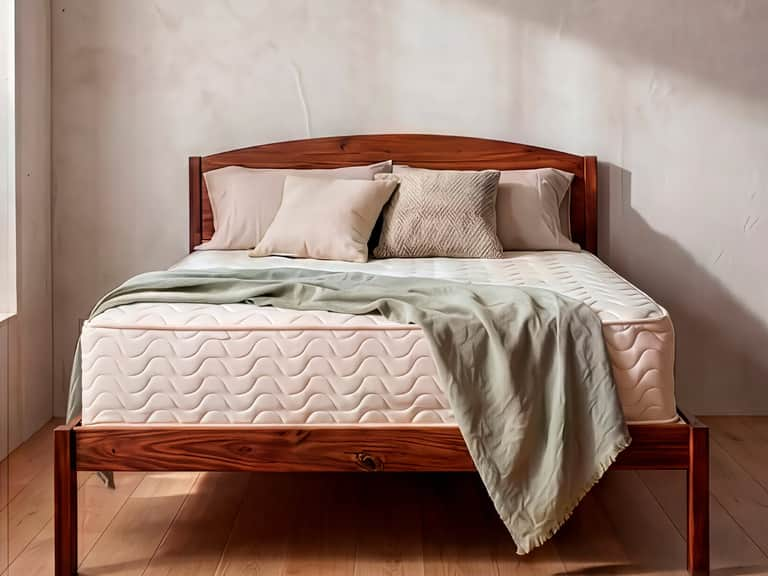
The Latex & Comfort Coil Mattress represents a contemporary synthesis of materials and spring technology. Handcrafted to order with organic Dunlop latex and Quantum Comfort Core Coils, it is wrapped in organic cotton and Eco-Wool to create a breathable, natural comfort surface. This configuration emphasizes airflow and long-lasting support while minimizing synthetic foam reliance.
In practice, sleepers may experience a buoyant, responsive initial feel from the latex, with a resilient core that preserves alignment under heavier loads. The Eco-Wool bolster and organic cover contribute to temperature regulation and a sense of natural comfort that many modern sleepers prize.
Price: $2,355.00 (sale and standard pricing shown together where relevant)
Materials: Organic Dunlop latex, Quantum Comfort Core Coils, organic cotton, Eco-Wool
For readers who value sustainable materials and a balance of bounce and support, this mattress offers a test-case in how pocketed coils can integrate with natural materials to create an appealing, durable sleep surface. It illustrates how a modern pocketed coil system can be part of a broader ecosystem of sleep technology—one that respects both human physiology and environmental considerations.
The Classroom of Sleep: Voices Across Time
The story of pocketed coils is not merely a tale of springs and fabrics; it is a narrative told through the voices of practitioners and researchers who studied sleep from distinct vantage points. Here are three key figures from different periods whose ideas reverberate in today’s mattresses:
- Early 20th century — Johan R. Petersen: A pioneer of modular spring concepts, Petersen’s exploration of independent coil behavior foreshadowed modern encased coil design. His experiments laid groundwork for how localized responses can shape overall comfort and durability.
- Mid-century — Martha L. Reed: An ergonomics advocate who connected orthopedic insight to product design, Reed’s interdisciplinary approach helps explain why sleep surfaces matter to spinal health and daily function. Her work nudges the industry toward a user-centered understanding of support zones.
- Late 20th century — Dr. Elena García: A sleep scientist whose research into motion isolation and temperature dynamics underscored the functional benefits of pocketed coils when paired with breathable materials. García’s findings helped anchor consumer expectations about a mattress’s ability to minimize sleep fragmentation.
These voices remind us that the best sleep technology emerges from a conversation between engineering, medicine, and everyday living. The pocketed coil, more than a mechanical component, becomes a stage where the aims of comfort, durability, and health converge.
Integrating the Pocketed Coil Narrative in Your Sleep Ecosystem
In a market crowded with springs, foams, and hybrid blends, the pocketed coil mattress offers a compelling narrative of precision and adaptability. It invites readers to consider how a mattress fits into a broader sleep ecosystem—one that includes pillows designed for alignment, breathable sheets to assist temperature control, and protective layers that extend durability.
To make the most of this approach, align your choices with a thoughtful strategy:
- Choose a pocketed coil mattress with a clearly engineered zoning plan that targets your primary load-bearing areas.
- Pair with supportive, breathable pillows that match your sleep position and neck geometry.
- Opt for natural or low-toxicity coverings and bedding fabrics that complement airflow and comfort.
In the end, the pocketed coil mattress is not merely a mechanical system; it is a platform for healthy sleep habits, precise engineering, and a kinder relationship with the things that help us rest and recover each night.
Conclusion: A Clear Guide for a Complex Topic
The pocketed coil system stands as a defining feature of modern mattress design, offering targeted support, reduced motion transfer, and durability that can be tuned to individual sleep needs. While no single metric can capture the full experience, a careful reading of coil counts, gauges, and the overall construction yields practical guidance for discerning buyers. When evaluated alongside other materials and design choices, pocketed coil technology reveals its strength: a flexible, resilient, and thoughtful approach to helping people sleep more soundly.
Selected Product Highlight
Latex & Comfort Coil Mattress
A modern pocketed coil system anchored by organic Dunlop latex, with a breathable, natural surface crafted from organic cotton and Eco-Wool. This mattress exemplifies the marriage of traditional spring technology with natural materials that promote airflow and comfort.
Price: $2,355.00
Product Overview: Handcrafted to order in the Natural Mattress Production Studio, this mattress combines plush latex with responsive Quantum Comfort Core Coils, wrapped in organic fabrics for breathable, natural comfort.
Materials: Organic Dunlop latex, Quantum Comfort Core Coils, organic cotton, Eco-Wool
Call to Exploration
This guide is only the beginning. The Pocketed Coil vs. Other Spring Systems conversation benefits from hands-on exploration, critical reading of sleep research, and a willingness to test and compare. If you’d like, we can assemble a 6–8 week content plan that deepens the educational thread with diagrams, exploded views, comparative charts, and cross-referenced case studies to help students, designers, and curious readers navigate the complexities of mattress construction.